


Certificate iv in kitchen management vs commercial cookery : Detailed Comperison
- ashfordcollegeau
- Mar 26
- 4 min read
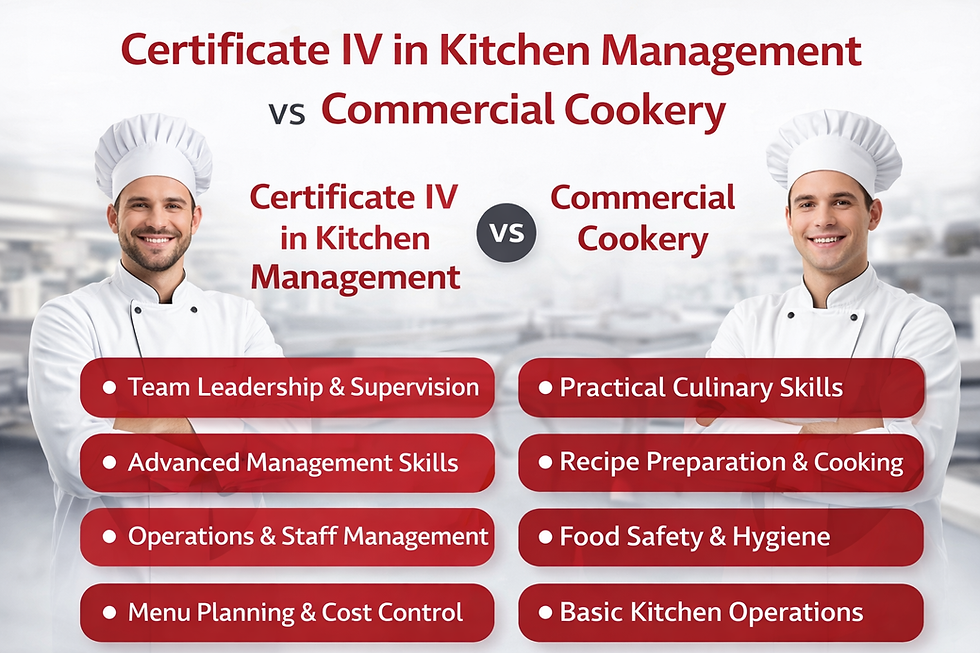
Choosing between Certificate IV in Kitchen Management and Cert III in Commercial Cookery is one of the most important decisions if you want to build a career in hospitality. Both courses are valuable, but they are designed for completely different stages of your career. One helps you start, while the other helps you grow into leadership roles.
This guide gives you a clear and complete comparison so you understand exactly what each course offers. From course structure and fees to career outcomes and progression, everything is explained in a simple and direct way so you can choose the right path without confusion.
What Is Certificate IV in Kitchen Management and Who Is It For?
Certificate iv kitchen management is designed for individuals who want to move beyond basic cooking roles and step into leadership positions within a professional kitchen. It focuses on managing kitchen operations, supervising staff, and ensuring everything runs efficiently.
This course is best suited for those who already have some kitchen experience or have completed a lower-level qualification. Instead of just cooking, you learn how to handle responsibilities such as menu planning, stock control, team coordination, and maintaining service standards.
If your goal is to become a kitchen supervisor, sous chef, or eventually manage your own kitchen, this course provides the skills and knowledge required to reach that level.
What Is Cert III in Commercial Cookery and Who Should Choose It?
Cert III In Commercial Cookery is the starting point for anyone entering the hospitality industry. It focuses on building strong foundational cooking skills and preparing you to work in a real kitchen environment.
This course is ideal for beginners who want to learn food preparation, kitchen operations, hygiene standards, and how to work under pressure. It is highly practical and helps you become confident in handling day-to-day kitchen tasks.
If you are new to the industry and want to become a professional cook or chef, this course gives you the base you need to start your career and gain real experience.
Course Structure and What You Will Learn
In commercial cookery, the focus is on hands-on training. You learn how to prepare different types of dishes, maintain hygiene standards, and work efficiently in a fast-paced kitchen. The training is practical and helps you become confident in handling real kitchen tasks.
In contrast, Certificate IV builds on those skills and adds a management layer. You learn how to plan menus, control costs, manage inventory, and supervise a team. It also includes planning, decision-making, and operational control, which are essential for higher roles.
Both courses are practical, but their focus is different—one builds your skills, while the other builds your responsibility and leadership.
Duration and Fees: What to Expect
The duration of these courses depends on your learning path and provider. Commercial cookery usually takes longer because it includes full foundational training along with practical experience. It often ranges from one to two years depending on the program.
Certificate IV is generally shorter, especially if you already have experience or have completed a previous course. It focuses on upgrading your skills rather than teaching from scratch.
Fees can vary based on the institute and location. However, commercial cookery is often more expensive due to its longer duration and extensive practical training. Certificate IV may cost less or vary depending on whether it is bundled with other programs.
Career Opportunities and Growth
After completing Cert III in Commercial Cookery, you can start working in roles such as cook, commis chef, or kitchen assistant. These roles help you gain experience and understand how professional kitchens operate.
With Certificate IV, you move into higher positions such as kitchen supervisor, sous chef, or kitchen manager. These roles involve more responsibility, including managing staff and ensuring smooth operations.
The difference in career growth is clear. One helps you enter the industry, while the other helps you move up and take control of operations.
Skills, Responsibilities, and Work Environment
In entry-level roles, your main focus is on executing tasks. You prepare food, follow instructions, and work under supervision. This is where commercial cookery prepares you effectively.
In management roles, your responsibilities increase. You are expected to manage teams, handle pressure, maintain standards, and ensure everything runs smoothly. Certificate IV prepares you for these responsibilities.
This shift from “doing the work” to “managing the work” is a major step in your career and defines your long-term growth.
The Role of Service and Customer Experience
Both courses include elements of Hospitality Customer Service, but the level of understanding is different. In commercial cookery, you learn basic service awareness and how your work impacts the customer.
In Certificate IV, you go deeper into service quality and consistency. You understand how customer experience affects business success, reviews, and long-term growth.
This knowledge becomes more important as you move into leadership roles where service quality is a key responsibility.
Study Options and Choosing the Right Institute
Both courses are offered by a wide range of institutions, including training providers offering Geelong Courses with practical and industry-focused learning. Choosing the right institute is important because it affects the quality of your training and your overall experience.
A good provider offers hands-on training, experienced instructors, and real-world exposure. This helps you become job-ready and confident in your skills.
Your learning environment plays a key role in how well you understand and apply what you study.
Which Course Should You Choose?
If you are just starting your career or have no experience, commercial cookery is the right choice. It gives you the foundation you need to enter the industry and build your skills.
If you already have experience or want to move into leadership roles, Certificate IV is the better option. It helps you grow, take responsibility, and move towards higher positions.
For most people, the ideal path is to start with commercial cookery and then progress to Certificate IV. This step-by-step approach gives you both skills and growth opportunities.
Final Thoughts
Both Certificate IV in Kitchen Management and Cert III in Commercial Cookery are valuable qualifications, but they serve different purposes. One helps you start your journey, while the other helps you grow into leadership roles within the hospitality industry.
The right choice depends on your current position and future goals. By understanding the differences clearly, you can make a confident decision that supports your long-term career growth. Choosing the right course at the right time can make a significant difference in how quickly and successfully you progress in the industry.


Comments